
I’m thrilled to share an amazing discovery I made about the PO, just yesterday. I intended this update to focus on the package window–is it a“ladies delivery window”?– I uncovered behind the old kerosene tank when I pulled it away from the building (footage of that adventure is on Insta). That little architectural delight was plenty to amuse me, but this news is momentous enough to overshadow it. (Look for more about the ladies’ window soon.)
Right now, I need to tell you about something incredible I learned from this week’s research on the post office documents.
Tuesday, I visited Bob Coffield at the Anderson County Museum in Lawrenceburg. I popped in a while back and connected with Bob during his weekly Tuesday hours staffing the museum. (We discovered that he also buys honey from my parents over at Beckham’s Bell Farms). His family has been in Anderson County for generations, and his mother taught at Western High School. As a member of the Anderson County Historical Society, he’s been a great resource, so this week I brought in a box of the oldest post office ledger books to share with him.
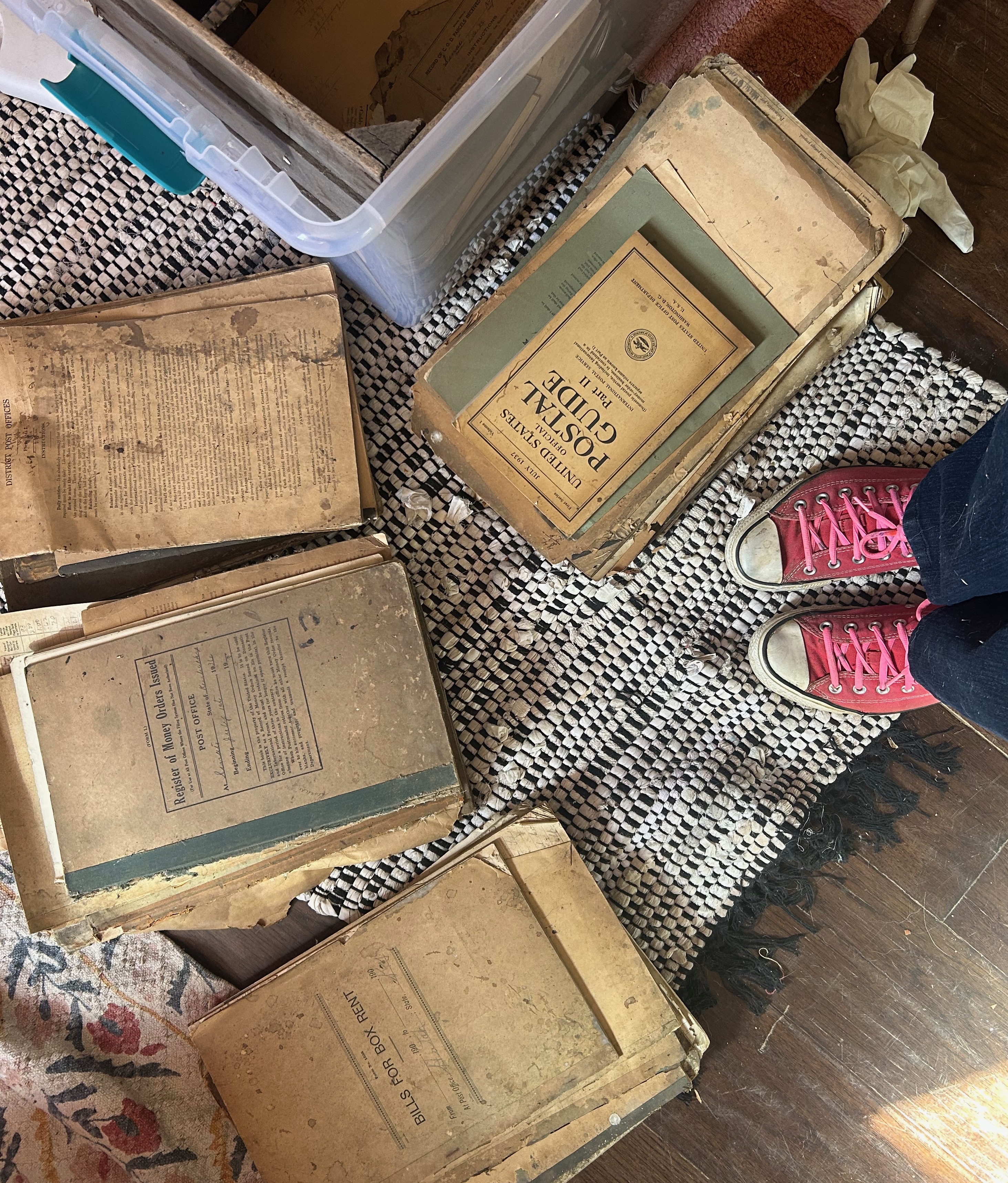
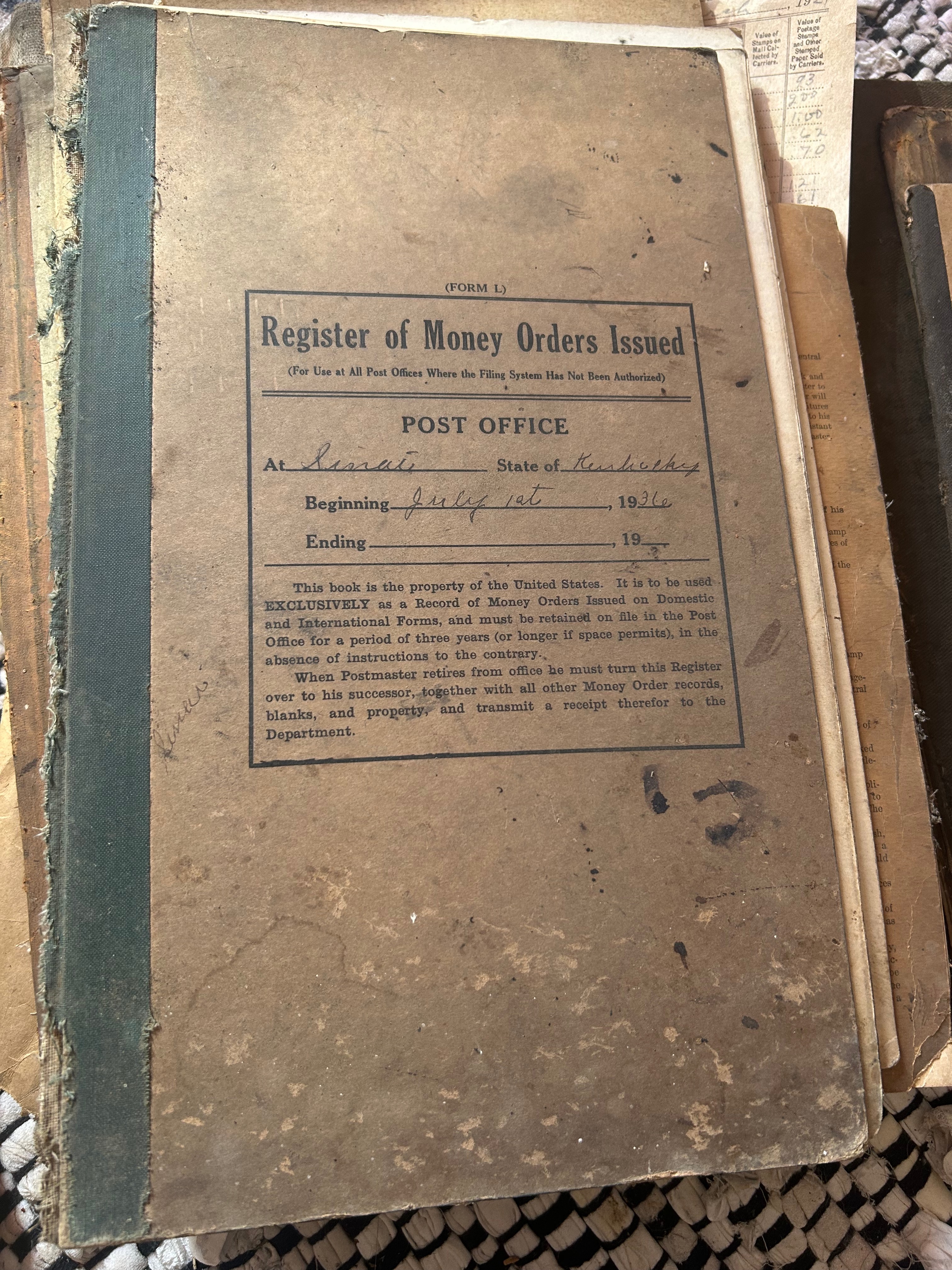
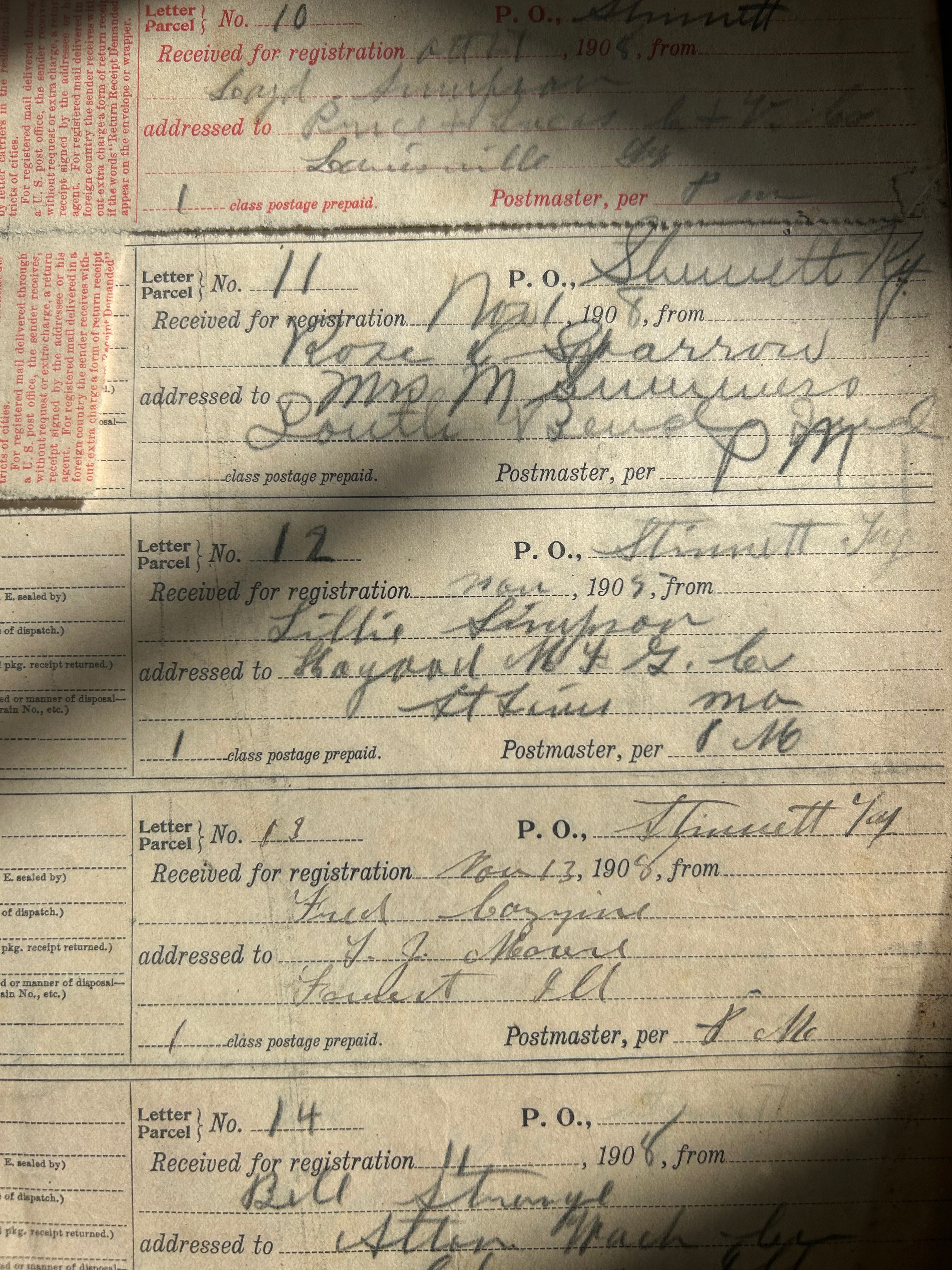
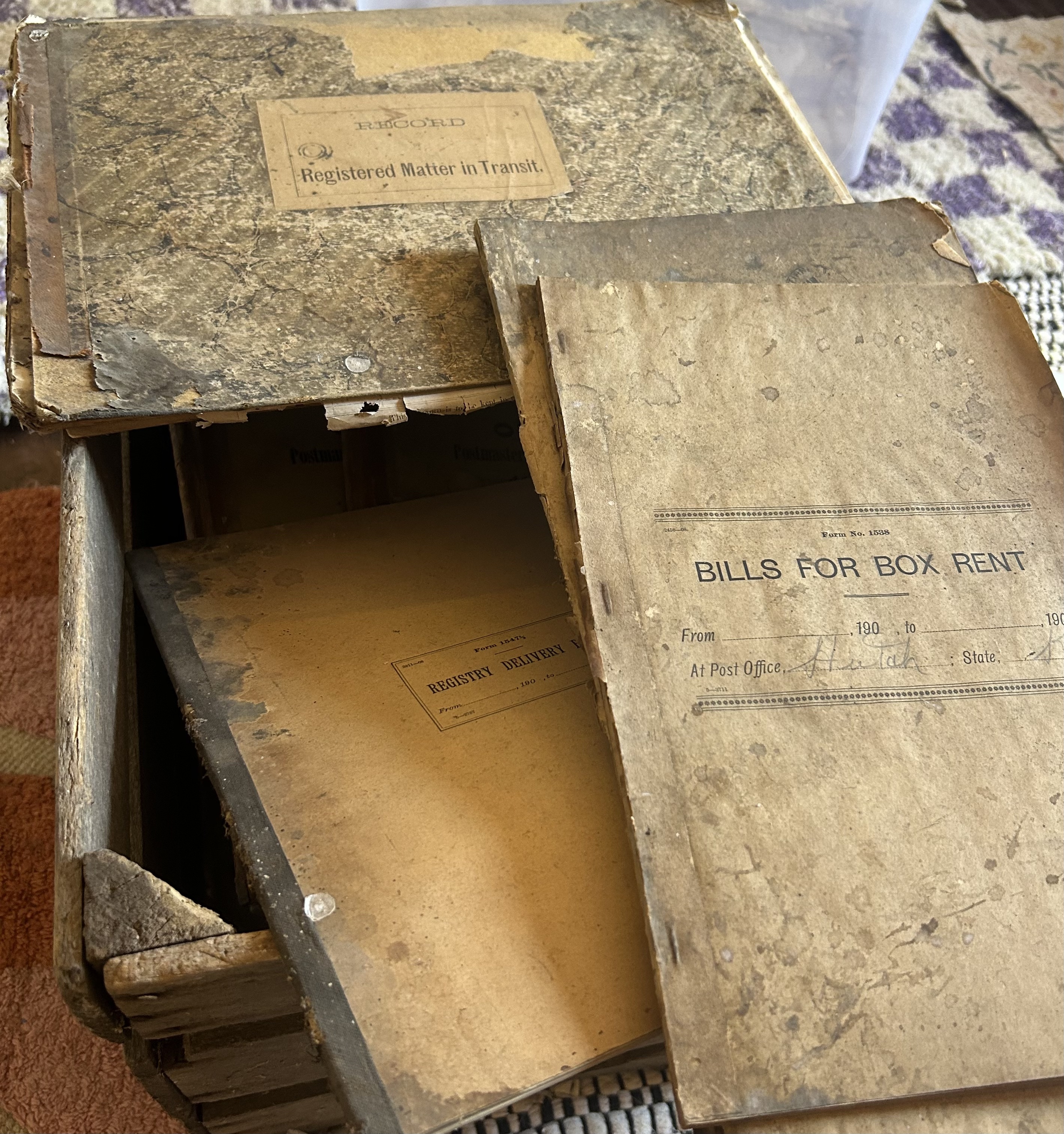
These ledgers (above) are significant, not only because they’re the oldest items in the OSPO, but because they’ve perpetuated a major mystery I’ve sought to crack from the very beginning.
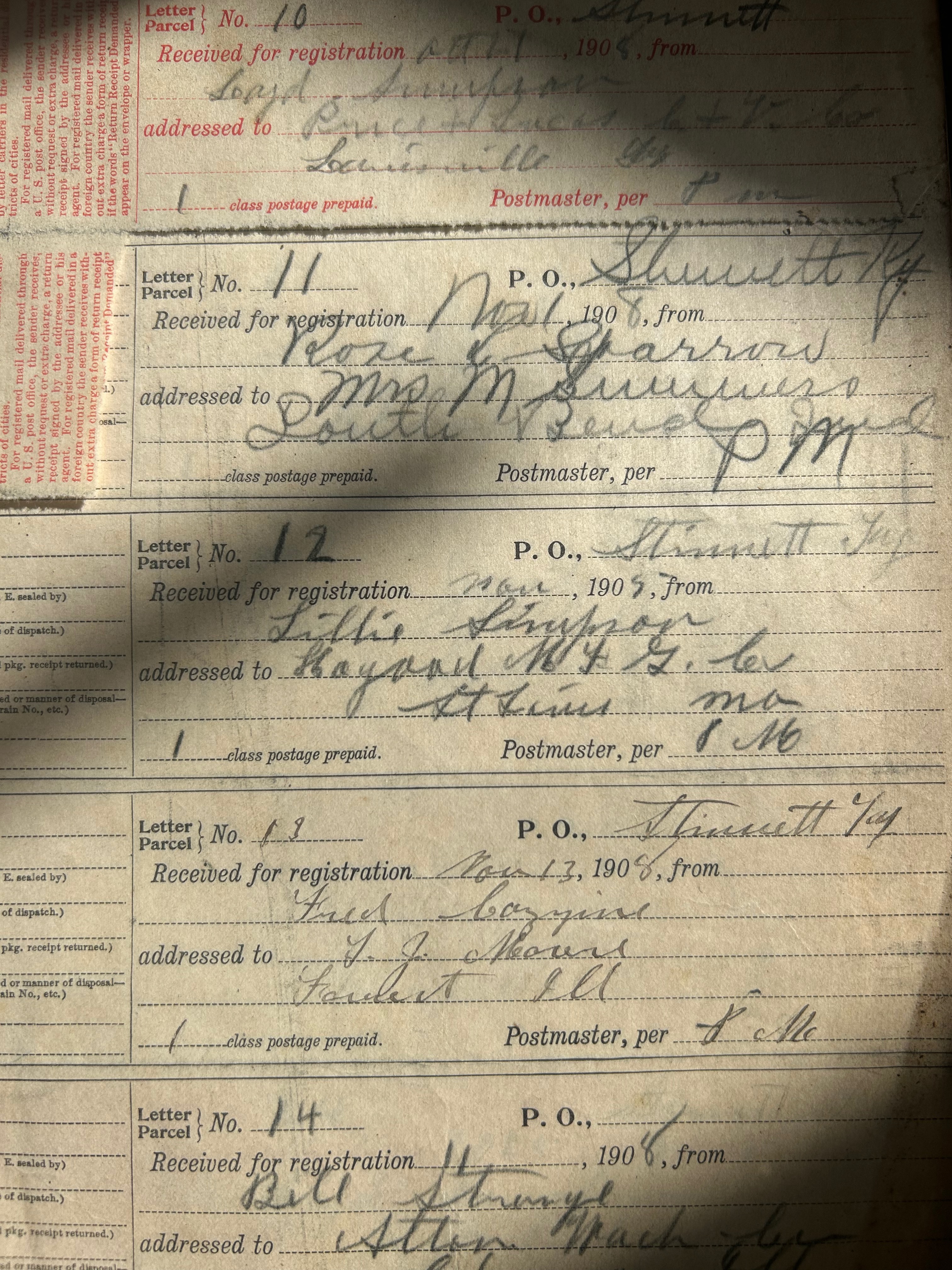
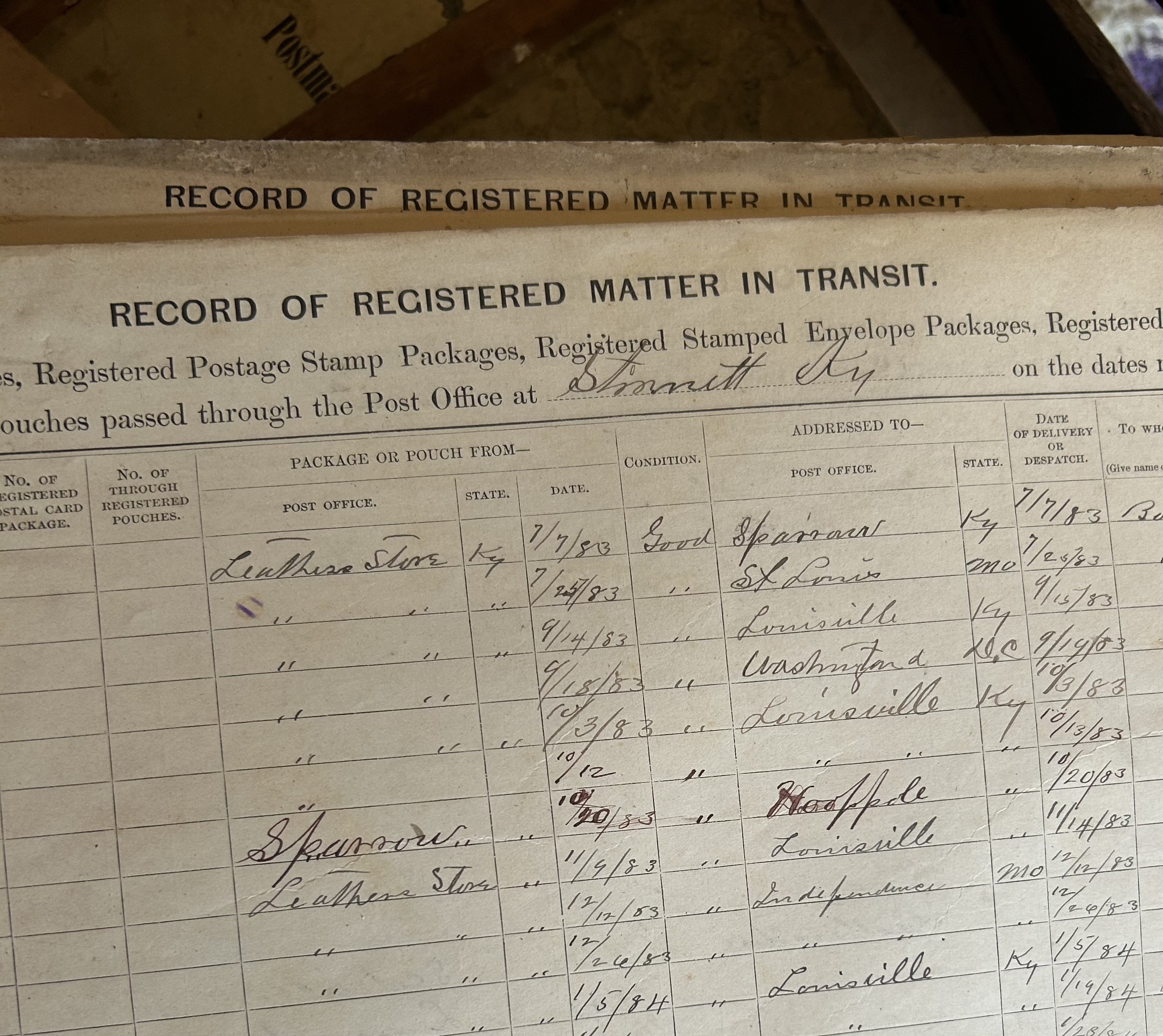
When I first moved here, I was given to understand that the PO at Sinai had existed since 1899. But the oldest ledger book in the collection dates to 1883. The place labels on the ledgers add to the mystery: while most of them are clearly labeled “Sinai,” (center, above) a few of them have other names scrawled, but still clearly legible, on those lines. The oldest of the books, papered on the outside with Victorian marbling, looks like a movie prop. Inside, at the top of the first page, where the other ledgers say “Sinai,” this one reads “Stinnett.” The other books, including dates from 1911 to 1915, bear the words “Hutch,” and “Cora.”

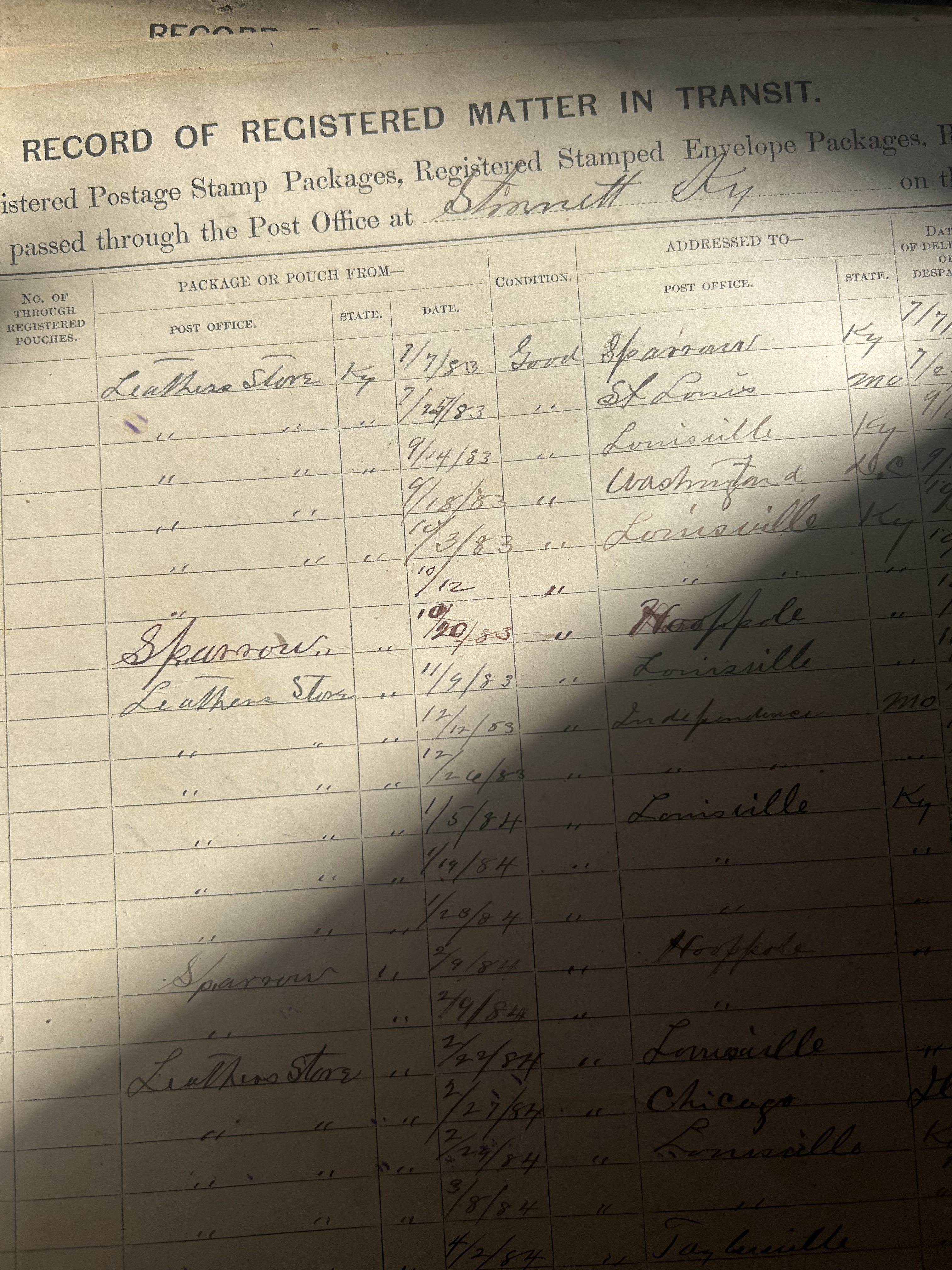


For the last five years, questions about these anomalous ledgers inflamed my curiosity: Does this mean the PO is older than 1899? Why is there a ledger that predates the post office? Why are a few of them labeled other things instead of “Sinai.” How did these items get here? Why were they included in the Sinai post office cache?
I’m ecstatic to tell you–I have the answers to all those questions, and they amount to something much cooler than I could’ve guessed or asked for.
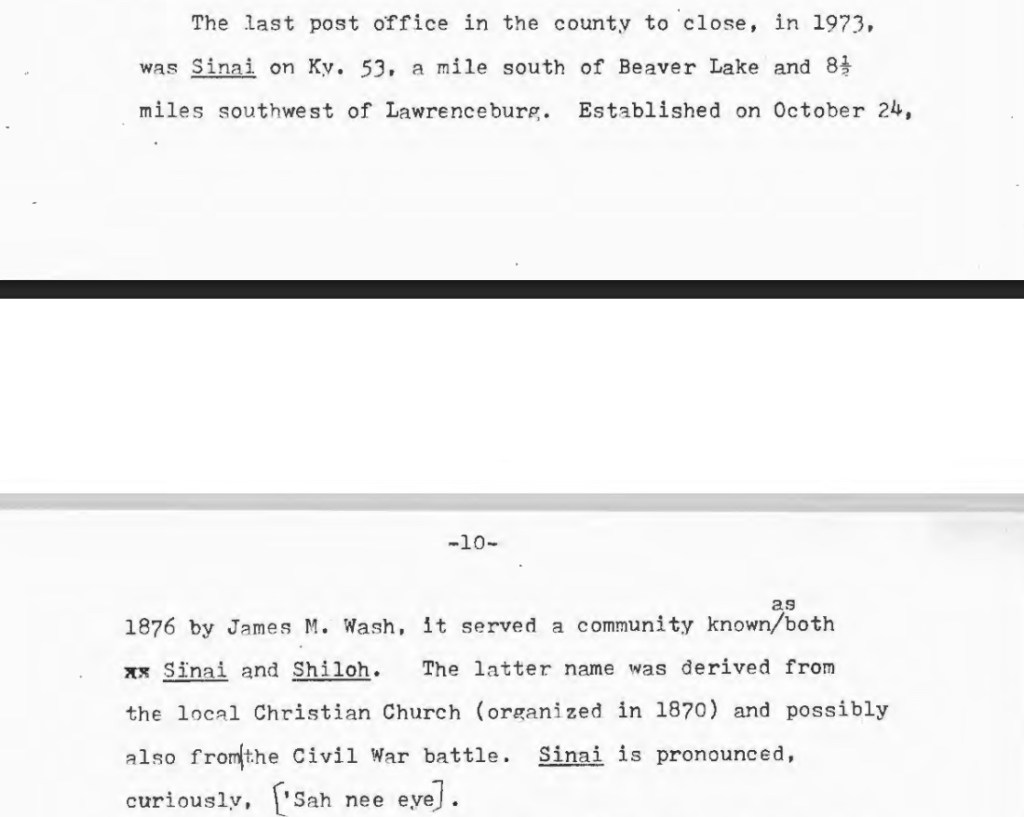
Earlier this year, my research led me to an article by Kentucky historian, Robert Rennick, on the history of the post offices in Anderson County. According to Rennick, the post office at Sinai opened in 1876 (image below). That resolved my initial question: the PO was older than I’d heard, so finding documents from 1883 made sense. The words “Stinnett,” “Hutch” and “Cora”, I wrote off as mislabeling, or assumed those ledgers served another purpose at the Sinai PO that I might never understand. I was wrong. History is never that simple.
From the 1870s to the turn of the 20th century, prior to free mail delivery, these tiny local POs dotted the countryside. They were mostly shacks, or even just a designated window on the side of a cabin. Horseback riders carried bags of mail from one post office to another, passing missives to their destination in a connected line, like runners passing a baton. Community members walked into the village and picked up their mail from the PO, making even the tiniest space a significant local hub. The 1890s saw the advent of free mail delivery, reducing the need for rural post offices, and many closed by the 1920s (Rennick).
As I sat chatting with Bob in the spacious military display room at the museum, he wondered aloud if I had discovered any of the other post office buildings in the area, or knew anything about them. I told him I’d spotted a shack or two that may have been a PO, once upon a time maybe near Fox Creek or Salt River, but it’s hard to know. (Small outbuildings are ubiquitous out here, and they can serve many purposes over a hundred and fifty years). But Bob got me wondering about the relationships between my PO at Sinai and the others nearby, so I went back to Rennick and discovered something incredible.

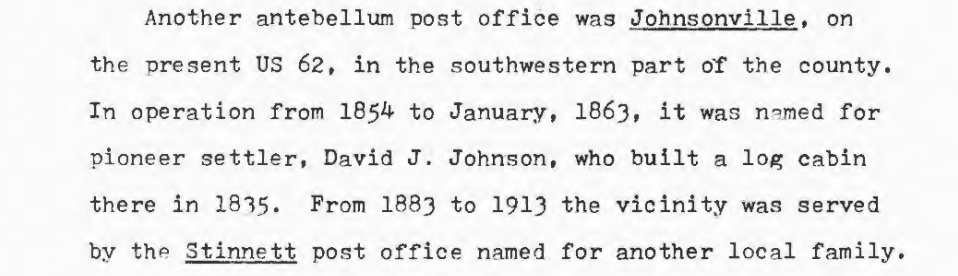
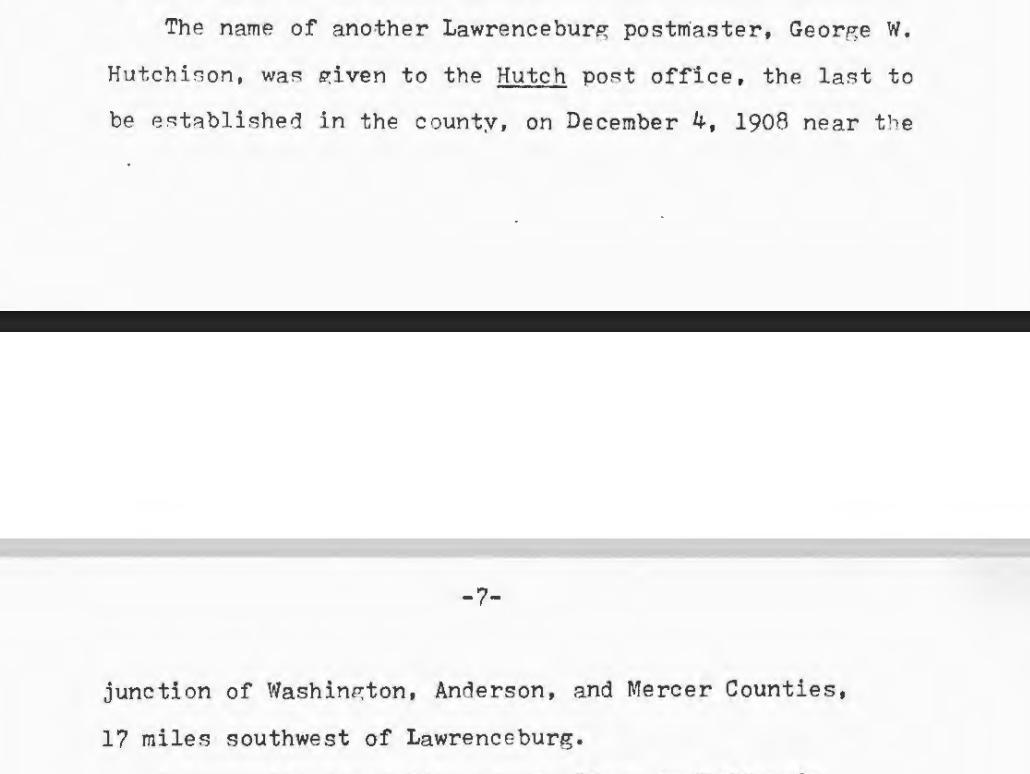

According to Rennick’s research, “Stinnett,” “Cora,” “Hutch” and “Leathers’ Store” are all western Anderson County post offices that fell to the wave of closures in the wake of free rural mail delivery. But there’s more:


When each of these POs closed, their mail and accompanying documentation (including the ledgers which would be necessary to handle remaining deliveries) was re-directed to Sinai.
My friends, I don’t have historical artifacts from a rural Kentucky post office.
I have historical artifacts from five of them.
And this is only the beginning.
Jess


Leave a comment